
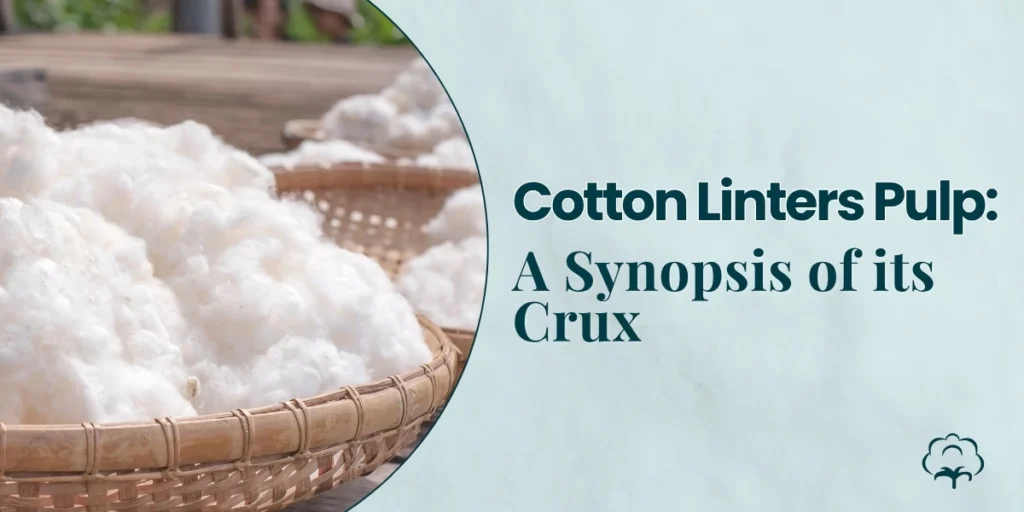
Everyone knows that the breathable cotton textiles universally preferred by people are a product of staple fibres harvested from vast cotton fields. But ever wondered what happens to the residual fuzz which is still left on cotton seeds after the lint fibres are separated? Do those tiny fibres go to waste? Fortunately, they don’t, for this fuzz, called cotton linters, is strikingly useful. These linters are processed into cotton linters pulp, which has applications in pharma, defence, cosmetics and paper manufacturing sectors.
Cotton Linters and their Pulp
Cotton linters are small fibres, fuzzy in texture, left behind on cottonseeds after the process of ginning. These fibres are separated from the seeds through a delinting machine, which removes the fuzz and gives out smooth seeds.
Cotton linters are processed to manufacture cotton linters pulp, a highly pure form of cellulose. Cotton linters pulp contains 98–99.5% pure alpha cellulose, as opposed to roughly 70–85% cellulose in raw cotton linters. Due to this level of purity, cotton linters pulp is preferred by several industries given the negligible amount of non-cellulose impurities and exceptional strength. Its degree of polymerisation (DP) ranges from around 500 to roughly 3000 because of controlled processing (cooking/bleaching), although unprocessed cotton has much higher DP.
Cotton Linter Pulp Properties and Characteristics
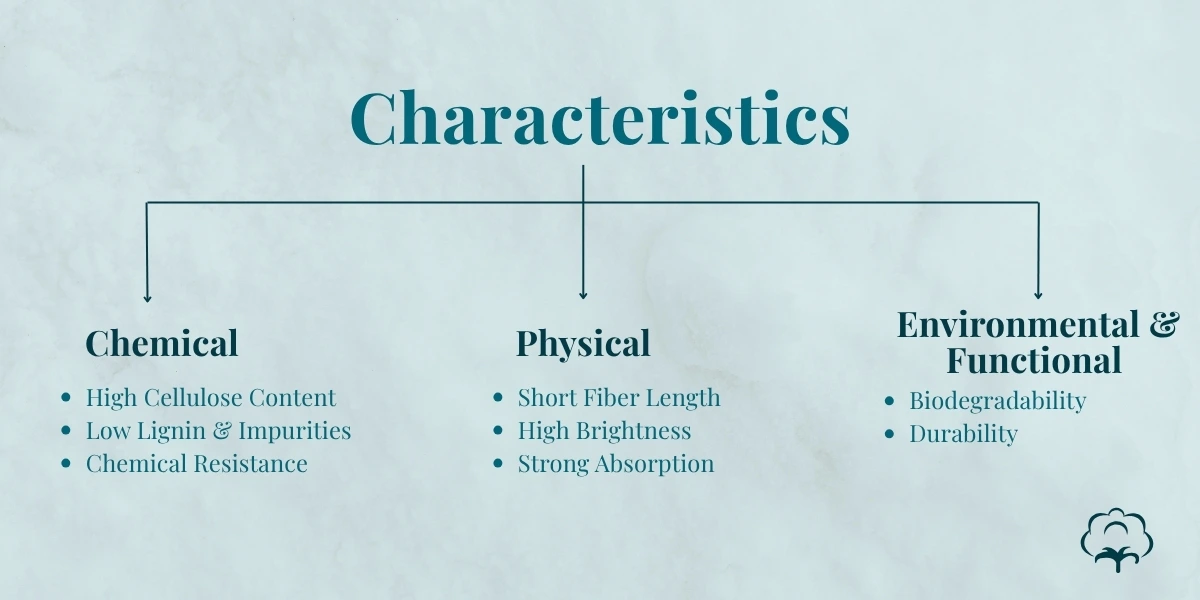 The characteristics of cotton linter pulp can be broadly classified into chemical, physical, and environmental & functional properties, although they are interrelated.
Chemical Characteristics
Chemical properties of linters pulp pertain to cellulose content, presence of lignin, along with resistance to chemical reactions.
-
High Cellulose Content
The presence of 98–99.5% alpha cellulose makes cotton linters pulp very high in cellulose giving it strength by still being non-toxic.
-
Low Lignin & Impurities
Trace amounts of lignin, hemicellulose and other impurities reduce contamination.
-
Chemical Resistance
Good resistance to weak acids, dilute and moderate alkalis, and organic solvents.
Physical Characteristics
Short length of fibres, brightness and good absorbency make up the physical features of cotton linters pulp.
-
Short Fiber Length
These linters pulp fibres are short and fine, thus offering a smooth, uniform appearance and texture.
-
High Brightness
Cotton linters pulp is very bright and does not age or yellow easily. Hence, it is used in papers high in quality and even currency notes.
-
Strong Absorption
The absorbent properties of linters pulp render it useful for medical and hygiene products.
Environmental & Functional Characteristics
-
Biodegradability
Being non-toxic and biodegradable, linters pulp is environmentally friendly, hence being superior to synthetic alternatives.
-
Durability
Lignin turns wood paper yellow and worn out. Little to no lignin present in linters pulp increases its longevity, while its chemical stability ensures damage resistance.
Cotton Linter Pulp Manufacturing Process
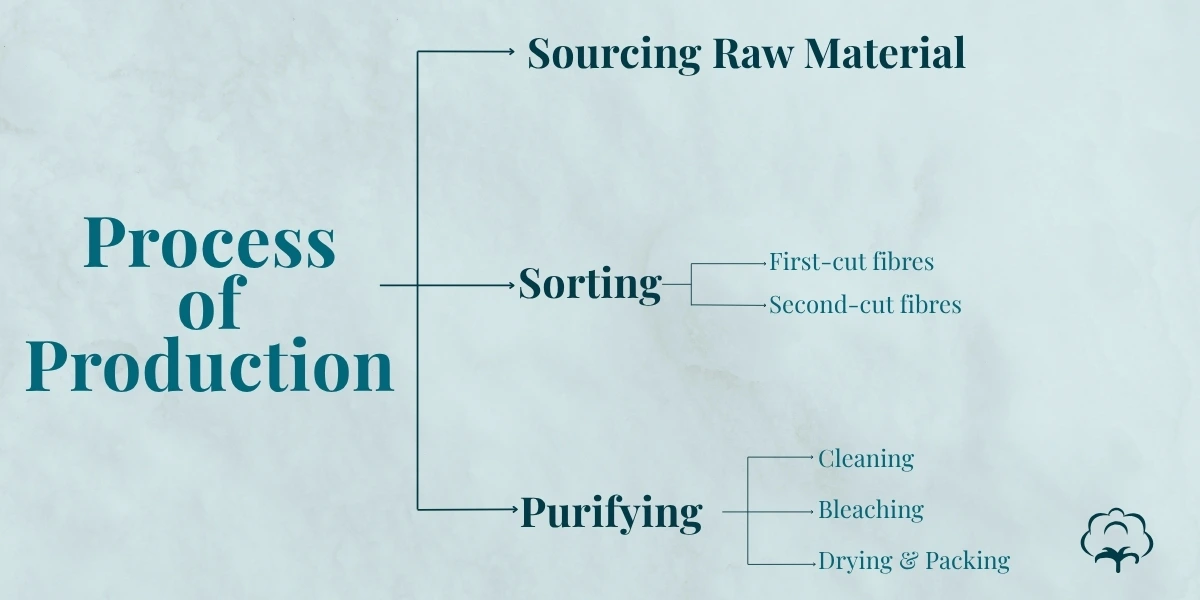
The long fibres are separated from the seeds through ginning. After this process is finished, the seeds remaining with shorter fibres i.e. cotton linters are delinted, and further industrially purified.
Sourcing Raw Material
Cotton bolls harvested from the fields undergo ginning, leaving the seeds with cotton linters. These linters are the raw material, separated from their seeds through delinting machines in the next step.
Sorting
In mills, the raw material passes through industrial delinting machinery, sorting it into two types:
- First-cut fibres (fibres passing the delinting machine initially)
Length: 4 to 8mm.
- Second-cut fibres (fibres passing the delinting machine a second time)
Length: less than 3mm
[lengths may vary as per different linters]
Sorting is vital not only to obtain uniformity in texture, but also as first-cut and second-cut fibres require different levels of chemical treatment, given their varying applications.
Purifying
The process of purification involves cleaning out any leftover dirt and other non-cellulose material, preparing it for bleaching. Further, the bleached cotton linter pulp is dried and then packed for shipping.
-
Cleaning
The dense lumps of fibres are loosened through opener and fluffer machines, after which the debris stuck in the linters is removed. The non-cellulose material (waxes and proteins) is treated by cooking in an alkaline solution, usually Sodium Hydroxide (NaOH, Caustic Soda) and then the pulp is thoroughly washed with water (or dilute acids) for neutralisation.
-
Bleaching
It is done to whiten the pulp, by destroying natural pigments, and to strip away residual impurities. The pulp is dispersed in water, forming a sort of slurry, following which bleaching agents are added under specific pH and temperature, as per the type of the bleaching agent (hydrogen peroxide, sodium hypochlorite, chlorine dioxide etc.). After bleaching, the product is rinsed with water/dilute acids.
-
Drying & Packing
The bleached pulp is drenched with water. Mechanical presses are used to remove excess water, preceding the thermal drying stage. Dryers are used to thermally dry out the remaining moisture, under controlled temperature conditions. The dried product is packed as per the uses and then stored/shipped accordingly.
Factors Affecting Cotton Linter Pulp Production
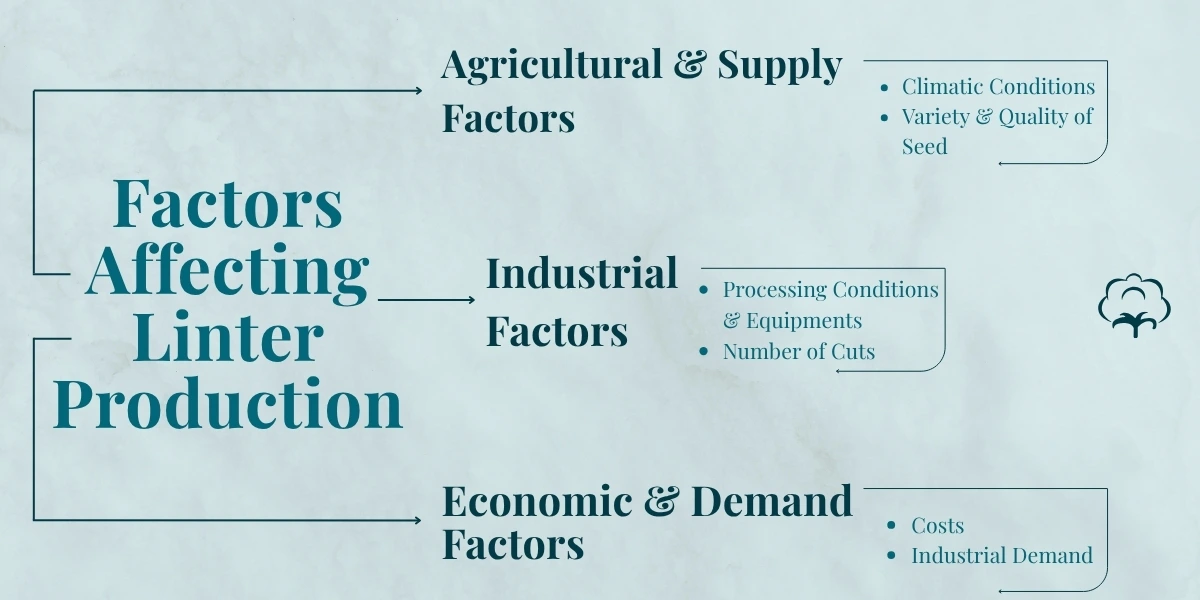
Cotton linters pulp production relies on the volume of raw material available, which is influenced by agricultural conditions. Besides, industrial factors are crucial too as they impact the quality of the pulp manufactured, along with costs incurred in the production process and the demand for cotton products.
Agricultural & Supply Factors
-
Climatic Conditions
Cotton requires warm temperatures, long sunny periods and sufficient rainfall. Colder climates and deficient/excess rainfall hamper healthy development of the plant.
-
Variety & Quality of Seed
Some cotton varieties produce more linters, while the others yield fewer linters. Also, fully mature seeds, accompanied by optimal storage conditions, produce better-quality linters as compared to immature seeds.
Industrial Factors
-
Processing Conditions & Equipment
The efficiency of the ginning, delinting and drying machinery directly affects the production of linters pulp. The processing is also dependent on the control over bleaching conditions such as pH, temperature and the selection of appropriate chemicals.
-
Number of Cuts
Applications of the pulp depend on the quality and length of fibre, in turn determined by sorting the first and second cuts. First-cut fibres are used by pharmaceuticals, while second-cut fibres relate to bulk industrial uses.
Economic & Demand Factors
-
Costs
Cotton prices fluctuate seasonally, making raw material cost essential to consider. Bleaching agents, alkaline solutions and other chemicals, along with the cost of industrial equipment, influence production. Compliance with environmental regulations (wastewater measures, restriction on the usage of chlorine-based bleaching agents etc.) also increases expenditure.
-
Industrial Demand
Demand for linters pulp largely drives production. Industrial demand comes from textile firms (viscose and rayon), paper manufacturing, pharmaceuticals, cosmetic industry etc. Demand from varying industries determines the end product, therefore fluctuations in industrial demand directly affect cotton linters pulp production.
Standard Industrial Grading for Cotton Linter Pulp
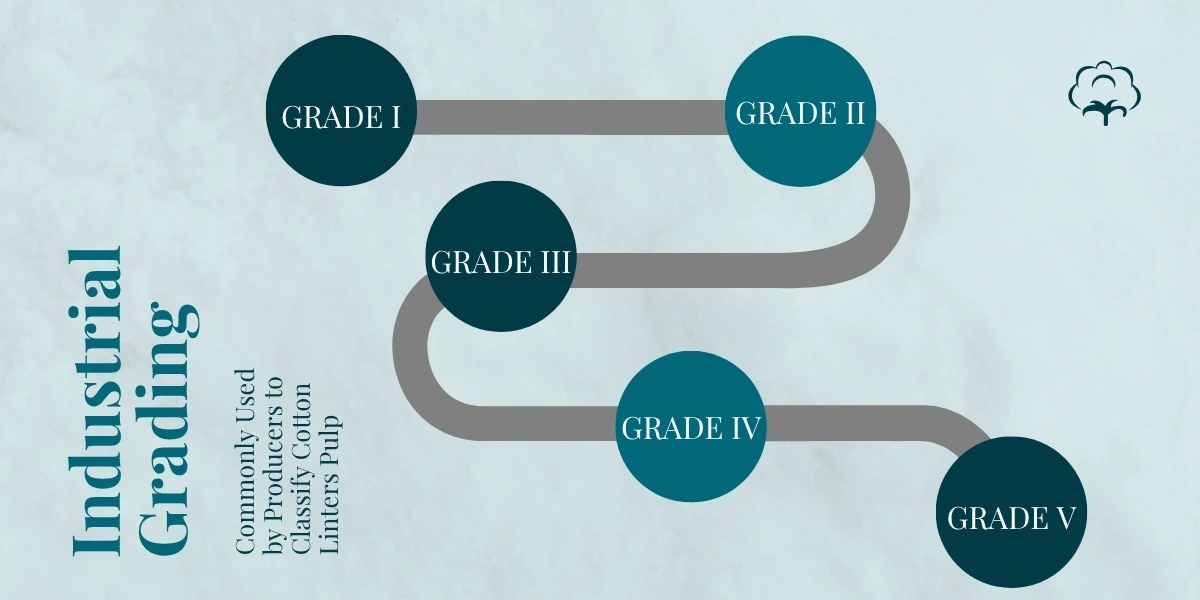
Standard industrial grades, commonly used by producers, classify cotton linter pulp on the basis of alpha-cellulose purity, whiteness and end use. There are generally five Grades assigned to cotton linter pulp that are deemed to be significant in trade and processing.
-
Grade I
Highest purity of all grades in terms of alpha-cellulose content (over 98%). Grade I pulp is very bright and exhibits highly controlled viscosity. Ideal for nitrocellulose, cellulose acetate and pharmaceutical cellulose.
-
Grade II
Has medium-to-low viscosity and a good level of whiteness. Chemically very pure with high amounts of cotton linter cellulose. Used by ordnance factories as it is considered military-grade and propellant-grade nitrocellulose.
-
Grade III
High brightness and low viscosity. Highly absorbent and durable. Used for manufacturing specialty papers, currency notes, archival papers, filter papers etc.
-
Grade IV
High-to-medium viscosity and lower brightness. Mainly used for synthesising chemical thickeners and ethers such as carboxymethyl cellulose (CMC). It is also used in making packaging boards.
-
Grade V
Unbleached cotton linters with the lowest levels of brightness and highest viscosity. Used for explosives and non-critical cellulose derivatives.
Conclusion
Exceptional purity and usability clearly elucidate the versatility of cotton linters pulp across different industries. With a wide variety of uses, from paper to pharma, it has emerged as an indispensable product, which serves as a catalyst for driving the production of numerous other downstream goods. Not only does it offer a lignin-free composition, but it is also a relatively eco-friendly substitute for synthetic materials. Abundant cotton supply in countries like India makes such pulp-producing industries a profitable market for cotton suppliers. The industrial demand for cotton linters pulp continues to grow steadily over the years, making it valuable for the upcoming decades too.
Frequently Asked Questions
-
Why does cellulose content matter in cotton linters pulp?
Cellulose content defines the purity and suitability for further applications of linters pulp. High-purity cellulose renders predictable chemical reactions during cotton linter processing.
-
What are the benefits of cotton linters pulp over wood pulp?
Higher alpha cellulose, lower lignin and smoother texture after processing are the benefits of linters pulp over wood pulp. Also, often cotton linters pulp may need less bleaching than wood pulp.
-
Which industrial grade cotton linters pulp is the most ideal?
The ideal grade completely depends on the intended application of linters pulp. Check “Standard Industrial Grading for Cotton Linter Pulp” for uses based on industrial grades.
-
How is linters pulp used in the pharmaceutical industry?
In pharma, cotton linters pulp is used to manufacture surgical sponges, cotton swabs, and wound dressing. Other applications in pharmaceuticals involve producing capsule shells, film coatings, tablet binders etc.
Glossary
Alpha cellulose: the longest-chain plant cellulose, with the highest strength and no impurities.
Cellulose: a tough and fibrous material, composed of sugar molecules which are joined together. It makes up the cell walls of plants, giving them shape and structure.
Degree of polymerisation (DP): the total number of monomers joined together forming a single polymer chain. It is important to know the length and size of particular molecules.
Delinting machine: the industrial device used to remove leftover cotton linters from cotton seeds after ginning.
Ethers: a molecule in which an oxygen atom is bonded with two carbon groups.
Ginning: a process by which long staple cotton fibres (lint fibres) are separated from raw cotton bolls through a cotton gin.
Hemicellulose: a group of complex carbohydrates that surrounds the cellulose walls of plant cells, giving plants the flexibility to bend and grow.
Lignin: a complex organic polymer that binds cellulose with hemicellulose fibres, providing stiffness to plants.
Nitrocellulose: a highly-flammable material made by treating plant cellulose (from cotton or wood) with nitric acid.
Viscosity: the property of a fluid which describes its resistance to flow or change shape.

