
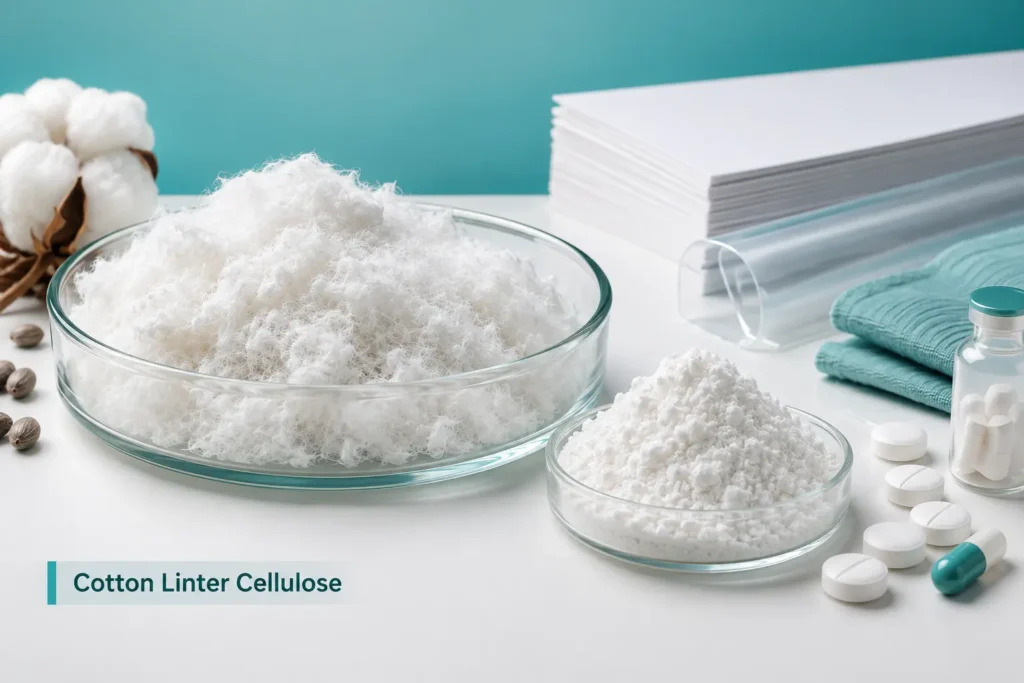
Cotton linter cellulose is a type of cellulose that manufacturers can make from short cotton fibers that come from cotton seeds after ginning. The cellulose content and other properties of cotton linters determine their potential applications, such as paper, cellulose derivatives, pharmaceuticals, films, fibers, and other industrial products.
This article discusses the definition of cotton linter cellulose, its production from cotton linters, properties and applications, and challenges in its production and application.
What Is Cotton Linter Cellulose?
Cellulose of cotton linter is cellulose that manufacturers purify and refine from cotton linters. Cotton linters are short cotton fibers that remain on cotton seeds after ginning removes the longer staple fibers. After processing and purification, it can contain more than 95% cellulose, depending on the grade and processing method.
Its properties depend on the quality of the linters and the methods used to purify and refine them.
How Is Cotton Linter Cellulose Produced?
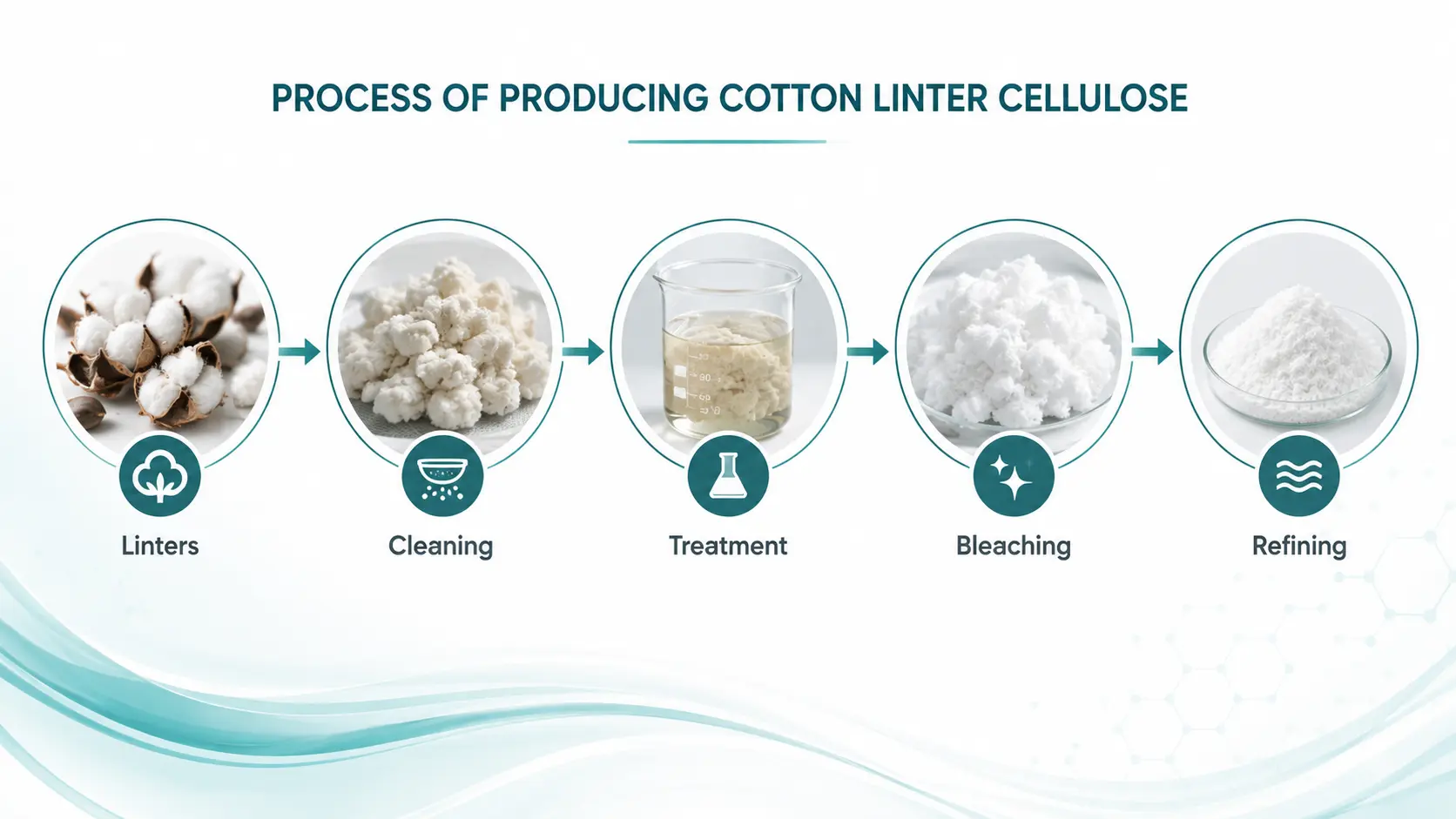
Manufacturers produce cotton linter cellulose through several stages, including cleaning, chemical treatment, bleaching, and refining. These steps remove impurities while retaining the cellulose needed for further processing. The main stages are:
1. De-linting and cleaning
Manufacturers clean the raw cotton linters to remove dust, seed particles, and other impurities. Mechanical cleaning preps the fibers for further processing.
2. Chemical Treatment and Cooking
Manufacturers perform chemical treatment of the cleaned linters to remove non-cellulosic carbohydrates.
3. Bleaching
Bleaching process is performed to brighten the fibres and improve their whiteness and purity, depending on the end-use application. This is especially important for cosmetic and pharmaceutical application.
4. Refining and Drying
Cellulose is then refined and dried to create cellulose that has the characteristics necessary for subsequent processing.
Properties of Cotton Linter Cellulose
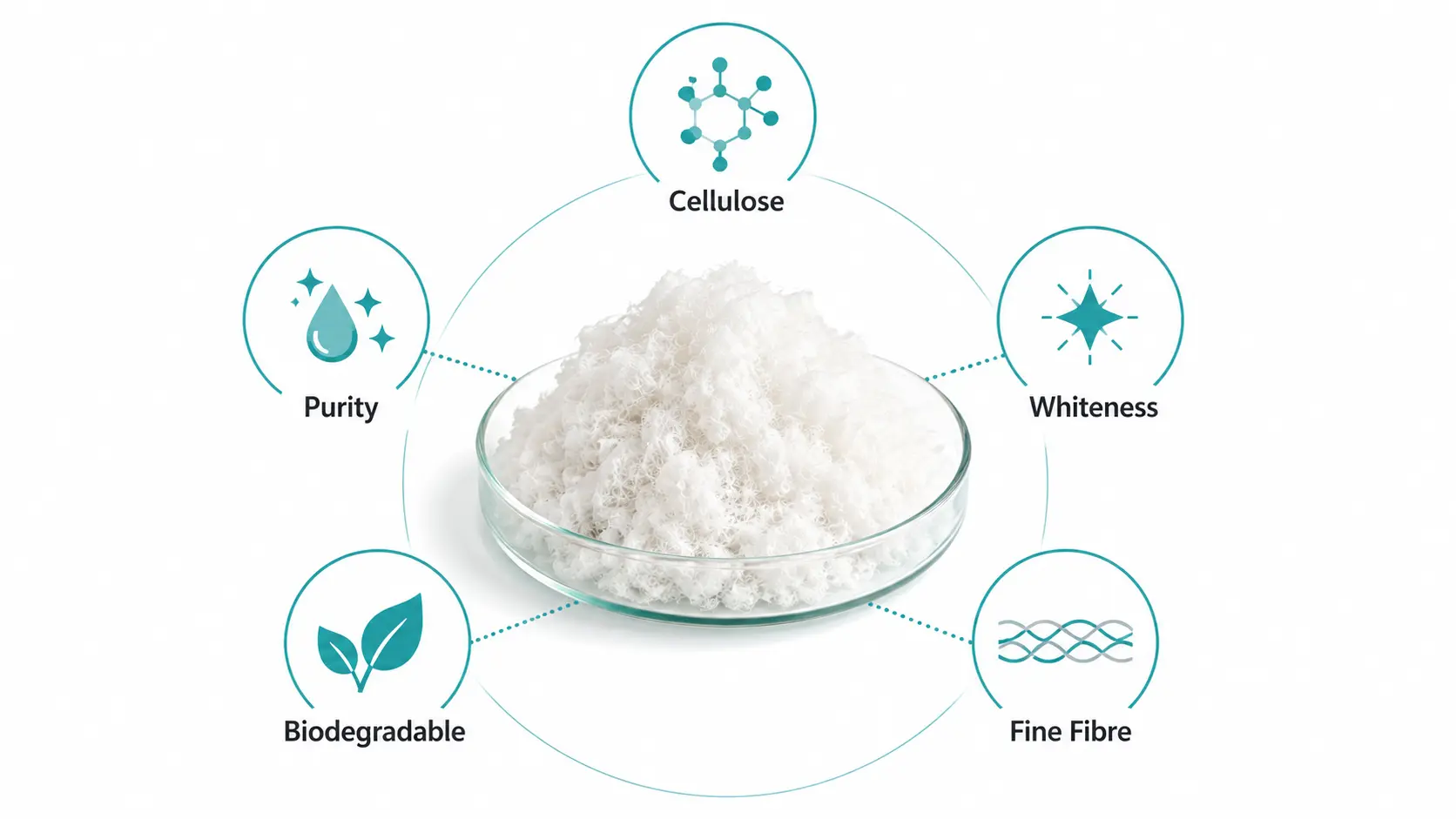
Cotton linter cellulose has several physical and chemical properties that support its industrial use.
- High Cellulose Content: It can contain more than 95% cellulose after processing, depending on the grade and production method.
- Biodegradability: As a natural cellulose-based material, it can offer biodegradable properties depending on the final product and processing.
- Chemical Stability: Its chemical properties can remain stable across a range of processing conditions.
- Whiteness and Purity: Bleaching can improve whiteness and purity for applications that require refined cellulose.
- Fibre Fineness: Its fine fibre characteristics can support applications involving films, coatings, and other specialized products.
Cotton Linter Cellulose vs Other Cellulose Sources
| Feature | Cotton Linter Cellulose | Wood-Based Cellulose |
|---|---|---|
| Source | Cotton linter fibres | Wood |
| Main component | Cellulose | Cellulose |
| Fibre characteristics | Short and fine | Generally longer fibres |
| Processing | Cleaning, treatment and refining | Pulping and purification |
| Typical applications | Specialty cellulose, paper and cellulose derivatives | Paper, packaging and cellulose products |
Applications of Cotton Linter Cellulose
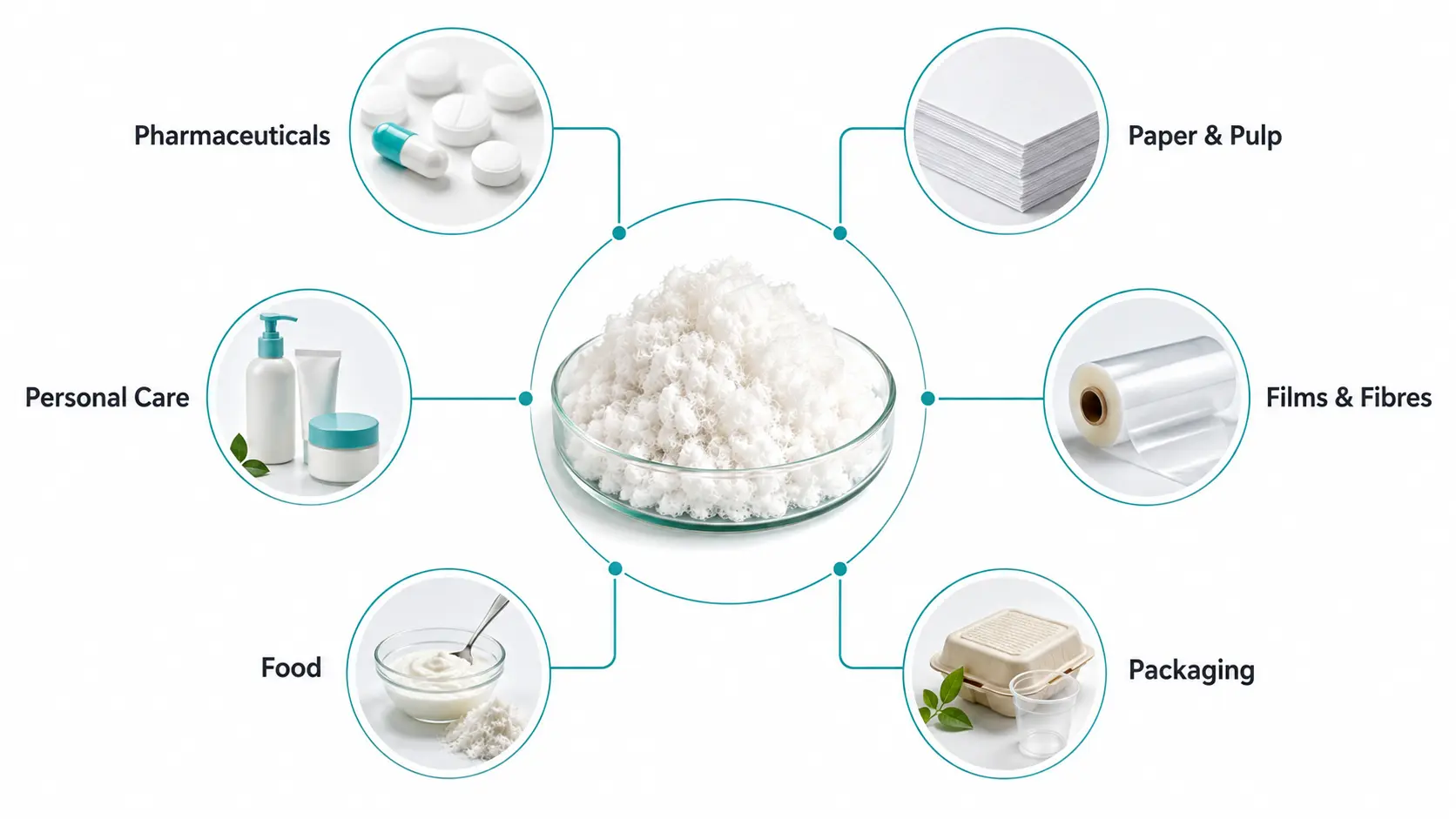
1. Pharmaceutical Applications
Manufacturers can process cotton linter cellulose into cellulose-based pharmaceutical excipients such as microcrystalline cellulose (MCC). Depending on the formulation, these materials can serve as fillers, binders, or other pharmaceutical excipients. The required purity and properties depend on the intended pharmaceutical use.
2. Paper and Pulp Applications
Cotton Linter Cellulose is an option for producers to utilize in order to make special papers that require purity and strength. It can be converted to cotton linter pulp that will allow the production of technical, filter, archival and security papers, among others.
3. Cellulose Acetate and Fibre Production
It can serve as a renewable raw material for cellulose-based films and fibres. Manufacturers can process it into cellulose acetate for applications such as cigarette filters, eyeglass frames, and photographic films. It can also act as raw material for regenerated fibers like rayon. Materials based on cellulose are also capable of facilitating the production of biodegradable films and other packaging applications.
4. Personal Care and Cosmetics
Manufacturers have the choice of using cellulose obtained from cotton linters and its derivatives in their formulations for cosmetic and personal care products. The examples of such substances include hydroxyethyl cellulose and carboxymethyl cellulose. These substances may be used by the manufacturers in different formulations such as toothpaste, lotions, shampoos, and creams.
5. The Food Sector
Cellulose from cotton linter can be converted to cellulose derivatives that can be applied in some food products. This can aid in thickening and altering textures, among other roles. The application of these cellulose derivatives is dependent on the specifications and formulation of the final food product.
6. Eco-Friendly Packaging with Bioplastics
Cellulose from cotton linters can also be used in developing packaging and bioplastics made from cellulose. Since it is a renewable material and contains cellulose, it can be used in research involving films, coatings, and molded materials. Based on the composition of the material, it can be utilized in packaging and other areas.
Challenges of Cotton Linter Cellulose
Cellulose of cotton linters offers several benefits, but manufacturers may face challenges when adopting it on a wider scale. The supply of raw linters depends on cotton production, which can vary because of agricultural conditions, pests, and climate.
Production costs can also be higher when manufacturers need highly purified cellulose. Cleaning, chemical treatment, bleaching, and refining require additional processing compared with some conventional cellulose sources.
A supply chain change could pose another challenge. Companies which already have sources for their cellulose would find it hard to switch their sources. The lack of processing facilities could also pose a challenge in implementing this.
Technology improvement in processing, better supply chain, and increased industry knowledge could solve these challenges.
Conclusion
Cotton linter cellulose is a refined form of cellulose obtained from the short fibres that remain on cotton seeds after ginning. Its properties make it suitable for applications involving specialty papers, cellulose derivatives, pharmaceuticals, films, fibres, and other industrial materials.
Its wider adoption will depend on consistent raw material supply, efficient production, competitive costs, and responsible manufacturing practices. As demand for renewable cellulose sources grows, it can provide another option for industries seeking cellulose-based raw materials.
If you are looking for cotton linter cellulose for industrial applications, you can explore Moirai’s cotton linter products. You can also find Moirai on Google Maps for location and directions.

