
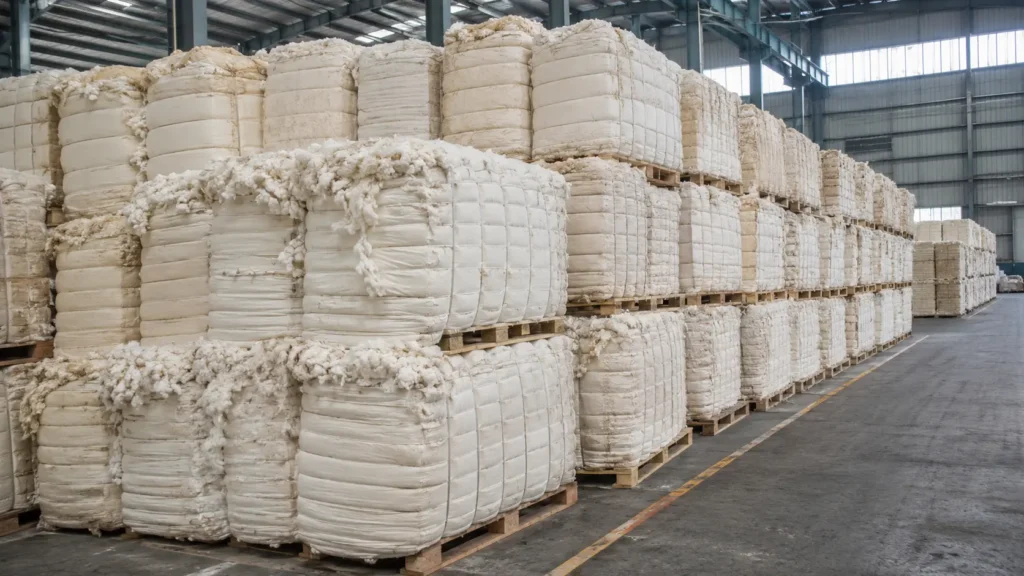
I’ve noticed something about industrial buying: nobody teaches you the boring parts. You learn what a product is, what it’s good for, maybe even how it’s made. But the part that actually costs you money, the packaging, the paperwork, the thing sitting in a warehouse for three weeks before anyone notices it’s wrong that part, you usually learn the hard way. This guide is about buying cotton linters in bales: the physical form nearly every serious order actually arrives in.
So this isn’t another piece explaining what cotton linters are. You know that already. This is about the bale – the physical object that shows up at your dock, and everything that goes right or wrong around it.
Why Cotton Linters in Bales Beat Loose Fiber Every Time
Loose cotton linters are strange stuff to move. They’re almost all volume and barely any weight, which sounds convenient until you try loading a truck with them and realize you’ve filled the whole thing without meeting your tonnage. Baling fixes that – and once you’ve seen a warehouse stacked cleanly with proper bales next to one where someone tried to cut corners with loose fiber, you stop taking the bale for granted.
A supplier who skips baling isn’t offering you a deal. They’re handing you their storage problem.
What a Standard Cotton Linter Bale Actually Looks Like
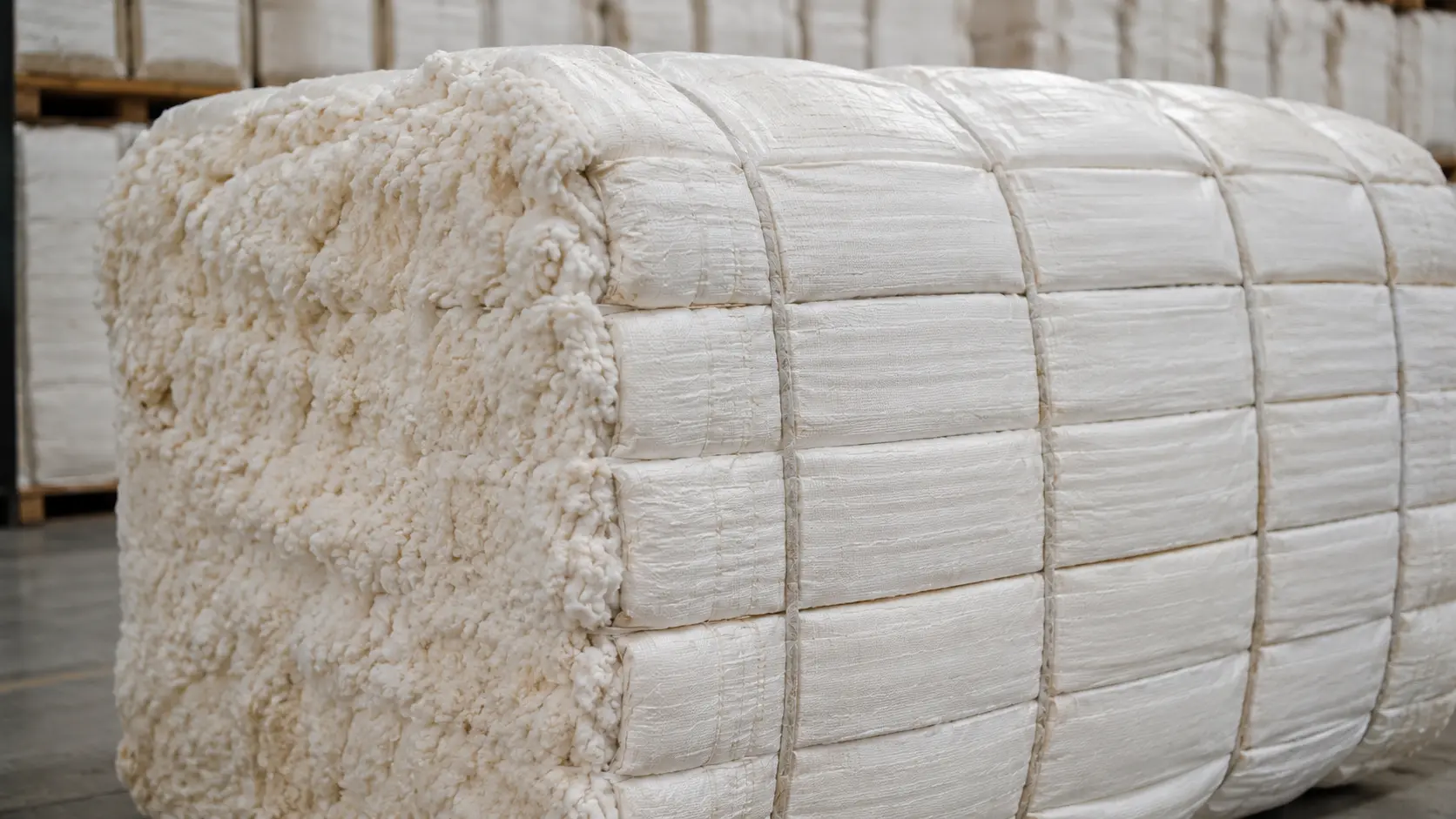
Bale weight isn’t one fixed number across the industry – it moves with region, with the press used, with local convention. Most commercial linter bales fall somewhere in the 150–220 kg range, which lines up with standard cotton bale weights out of producing countries like India, Pakistan, and Egypt. That’s a useful mental anchor, not a promise. Get the real number from whoever you’re actually buying from.
Take Moirai Cotton Pulp, out of Hisar in Haryana, as an example of the kind of specifics a real supplier should hand you without a fight: cotton linter at ₹21 per kg, a minimum order of 15 tonnes, and delivery inside 10–15 days. Their linter runs a degree of polymerization between 2800 and 3000 DP, and they sell it across first, second, and third cut, plus Mill Run – the grade that tends to move fastest. Notice what’s missing from that list, though: bale weight, dimensions, wrap type. A supplier can be completely transparent about grade and price and still leave the packaging specifics for you to ask about directly – which tells you something. Ask anyway. It’s one more phone call.
On wrap, you’ll run into two real options in practice:
- Jute or hessian – the older, breathable choice, fine in dry climates
- HDPE woven polypropylene – a better moisture barrier, and usually the safer call over a long sea voyage
Neither one is simply the better option. It depends on where the bale is going and what it’ll pass through to get there.
Reading a Bale Like You Mean It
A properly packed bale carries its own paperwork, stitched right into the wrap: a grade or quality code, a batch number, the net weight, the supplier’s name and origin. Most buyers glance at this once, at the dock, and move on. That’s a mistake. Check it against your purchase order the moment the shipment lands – while it’s still one crate on a loading bay, not one of forty already buried in your warehouse. A mismatch caught early is a two-minute fix. Caught late, it’s a very different conversation.
Storage Is a Safety Question, Not a Housekeeping One
Cotton linters burn. That single fact should reorganize how you think about storing them.
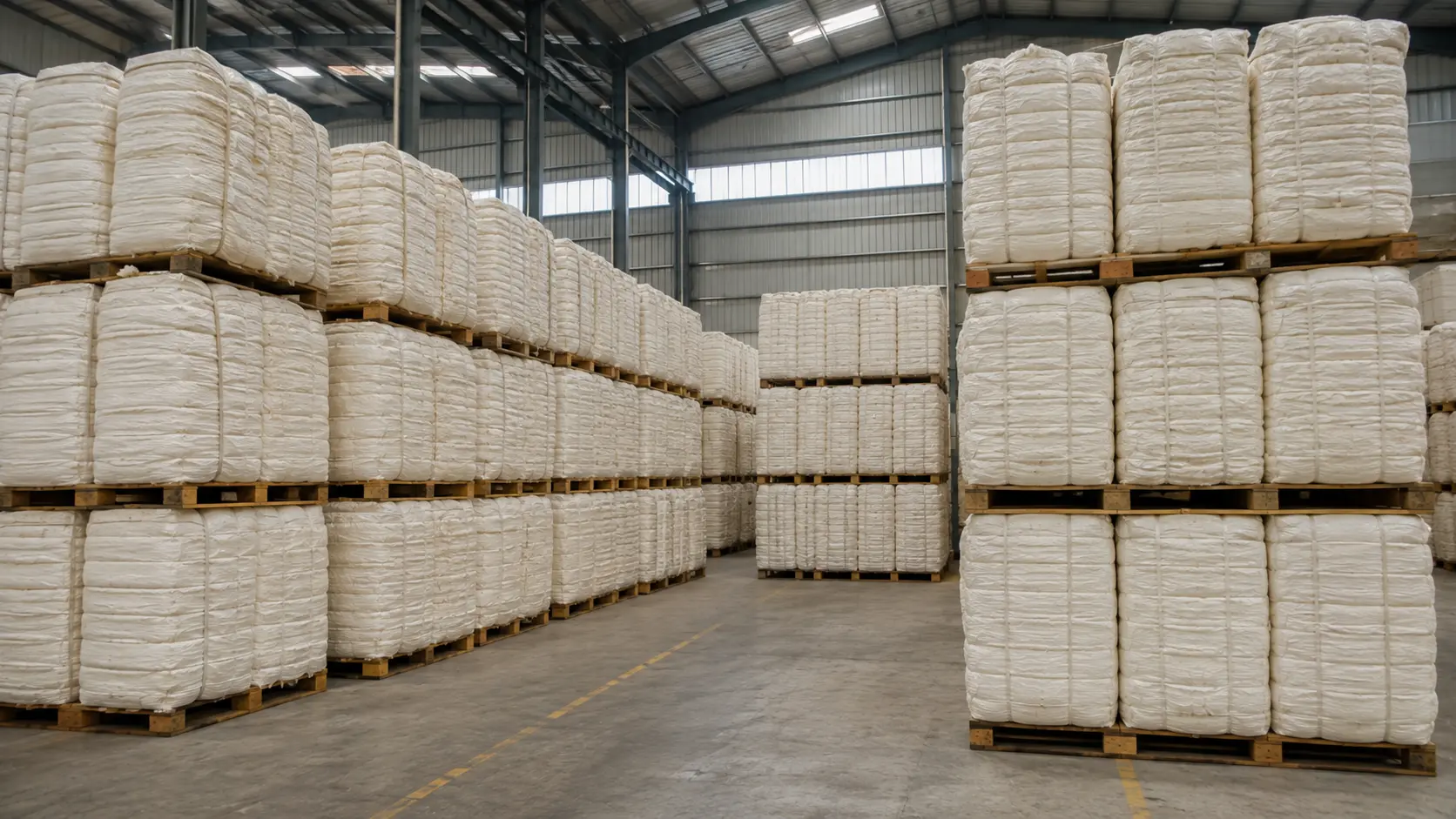
Keep bales dry and covered, wrap intact. Get them up off the ground and onto pallets – concrete pulls moisture upward in ways that surprise people. Leave real space between rows, both for air movement and for the version of this where something does go wrong and someone needs to get in fast. Keep the stock away from anything that generates heat or a spark. And rotate what you have – first in, first out – so nothing sits long enough to become a problem nobody remembers agreeing to.
If you want one signal to watch for above all the others: torn wrap. The moment that seal breaks, moisture and contamination aren’t risks anymore – they’re just a matter of time.
The Container Is Where the Real Money Hides
Here’s the part that quietly decides your margins: how many bales actually fit in a container. Ask your supplier or your freight forwarder for the real count on a 20ft or 40ft container, based on their actual bale size and density – not an industry average, their number. That single figure moves your landed cost per ton more than almost any other decision in this entire process.
While you’re at it, confirm the paperwork too – HS code, certificate of origin, and whatever phytosanitary or fumigation certificate your destination country requires. And don’t underestimate loading pattern: bales that are uniform and tightly packed load faster and shift less in transit, which is one more reason a supplier’s bale consistency matters more than it seems like it should.
Per Bale, Per Ton – Know Which One You’re Actually Comparing
Suppliers quote prices both ways, and it’s an easy trap. Always convert to price-per-ton before setting two quotes side by side, because bale weights differ supplier to supplier. A lower price per bale from someone packing lighter bales can, quietly, turn out to be the more expensive option once the math is actually done.
Before You Commit to a First Order
Get five things in writing, before any money moves:
- The exact bale weight and dimensions
- The wrap material, and how it holds up against moisture
- How many bales fit per container on your specific route
- The minimum order – in bales or in tonnes
- Whether a certificate of analysis comes standard, or only if you ask
None of this is complicated. It’s just the kind of thing that’s easy to skip when you’re excited about a good price and expensive to have skipped later.
Want to See Where This Comes From?
Reading specs on a page is one thing seeing the actual operation is another. If you’re evaluating Moirai Cotton Pulp as a supplier, their Google Business profile has real customer reviews, verified location details, and current contact info you can check before reaching out directly.

