
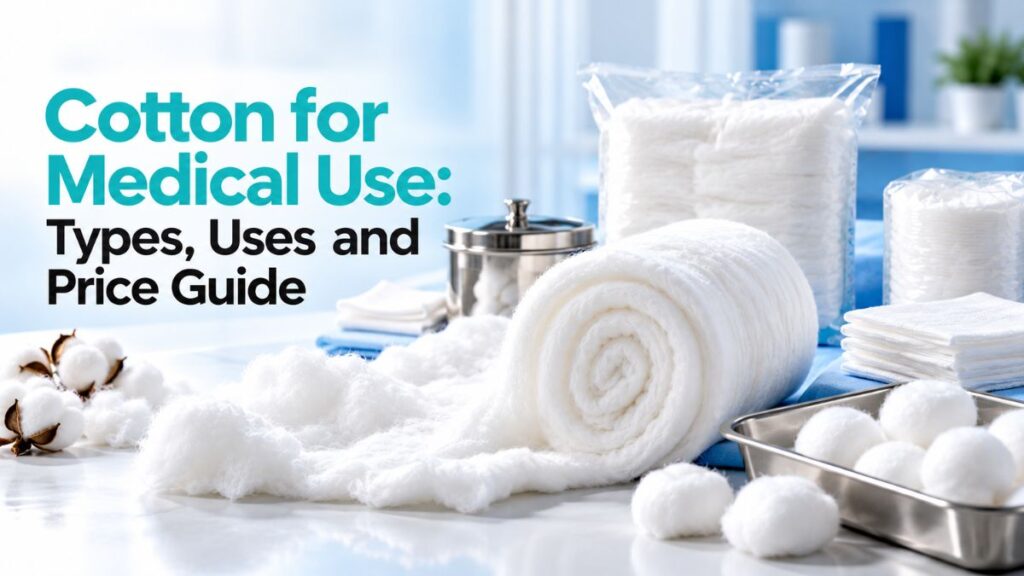
Quick answer: Cotton for medical use mainly refers to absorbent cotton, also called surgical cotton or cotton wool. It’s made by bleaching and purifying raw cotton, then sometimes sterilizing it for hospital use. Retail packs typically cost ₹150 to ₹400 per kg, while bulk wholesale rates run closer to ₹110 to ₹150 per kg for manufacturers and distributors.
Medical cotton shows up everywhere in healthcare, from a quick dab of antiseptic at home to sterile packs used in surgery. So what exactly makes cotton “medical grade,” and how does it differ from the cotton you’d find in a t-shirt? Here’s a clear breakdown.
What is cotton for medical use?
Medical cotton starts as raw cotton, then goes through a specific process to make it suitable for healthcare. First, manufacturers remove impurities like seeds, leaves and natural waxes. Next, they bleach the cotton to achieve a high standard of whiteness, which also boosts its absorbency. For surgical applications, the cotton then gets sterilized.
This process transforms ordinary cotton fibre into something highly absorbent and free from contaminants, exactly what’s needed for wound care and hygiene.
Types of cotton used in medical settings
Medical cotton comes in a few different forms, each suited to a specific job:
- Absorbent cotton wool – bleached, purified cotton used for padding, cleaning and general wound care. The most common type.
- Cotton rolls and zig-zag cotton – long, continuous forms used for wound dressing, padding under casts, and general hygiene tasks.
- Cotton balls – small, pre-formed pieces used mainly for applying antiseptics or cleaning small wounds.
- Surgical cotton – sterilized, highly purified cotton used directly in operating rooms. It meets stricter standards than general absorbent cotton, since it comes into direct contact with open wounds during procedures. For a deeper look at how it’s made and what safety standards it follows, check out our guide on surgical cotton types and properties.
Here’s the key distinction to remember: sterile cotton is used in surgical settings, while non-sterile cotton works fine for general hygiene and first aid.
Medical cotton vs regular cotton
Both medical cotton and regular cotton come from the same plant. However, the similarities mostly end there.
Medical cotton goes through extensive processing to remove natural impurities, waxes and fats. This purification significantly boosts absorbency, which matters when you’re dealing with wound fluids or applying antiseptics. Regular cotton, used in textiles, skips most of this purification since absorbency isn’t the priority there.
So while your t-shirt and a cotton roll both start from the same raw material, only one of them is built to absorb fluid safely and hygienically.
Quality grades and standards
Not all medical cotton meets the same bar. Hospitals and pharmacies typically look for IP grade (Indian Pharmacopoeia) or BP grade (British Pharmacopoeia) certification, which confirms the cotton meets recognized purity and absorbency standards.
These grades matter because they verify that the cotton has been properly processed and tested. Buying certified cotton means you’re getting a consistent, safe product rather than something that merely looks right.
The fibre itself also plays a role here. Short staple, high-micronaire cotton generally works best for absorbent cotton production, since these properties affect how well the fibre absorbs and processes into a usable form. If you want to understand these fibre-level details, our article on cotton fibre quality parameters breaks it down further.
How much does medical cotton cost?
This depends entirely on how much you’re buying.
Buying a pack?
If you’re picking up medical cotton from a pharmacy or general store, here’s what to expect:
| Type | Typical retail price (per kg) |
| Basic absorbent cotton wool | ₹150 to ₹200 |
| Branded, IP-grade cotton | ₹190 to ₹250 |
| Sterile surgical cotton | ₹250 to ₹400+ |
A few factors push retail prices up or down:
- Sterility – sterile cotton requires additional processing, which adds cost
- Brand reputation – established brands often charge more for consistent quality
- Pack size – smaller packs usually cost more per kg than bulk packaging
Sourcing in bulk?
Manufacturers, distributors and hospital procurement teams buying at scale pay considerably less per kg. For example, bleached surgical cotton at wholesale volumes runs around ₹110 per kg, though this typically requires a minimum order of around 1.5 tonnes, with delivery in 10 to 15 days. If your business needs medical cotton at this scale, our bleached surgical cotton page has the full specifications.
One thing worth checking either way: the listed price per kg doesn’t always reflect the usable material. A poorly processed roll might weigh the same as a high-quality one but deliver less actual absorbent cotton once you account for waste and fibre loss.
If You Want to Visit Our Factory Unit You can Visit Our Google Business Profile
FAQ
Which cotton is used in medical?
Absorbent cotton wool is the main type used in medical settings, commonly called surgical cotton or hospital cotton. It’s bleached, purified cotton, sometimes sterilized for surgical use.
How much does 1 kg of medical cotton cost?
Retail packs typically cost ₹150 to ₹400 per kg, depending on grade, sterility and brand. Buyers sourcing in bulk, such as manufacturers or hospitals, pay closer to ₹110 to ₹150 per kg at larger order quantities.
What’s the difference between surgical cotton and regular absorbent cotton?
Surgical cotton is sterilized and meets stricter purity standards for use in operating rooms. Regular absorbent cotton works for general wound care and hygiene but isn’t necessarily sterile.
Why is medical cotton more expensive than regular cotton?
Medical cotton goes through extra processing, including bleaching, purification and sometimes sterilization. This added processing, along with quality certification, increases the cost compared to regular cotton.

