
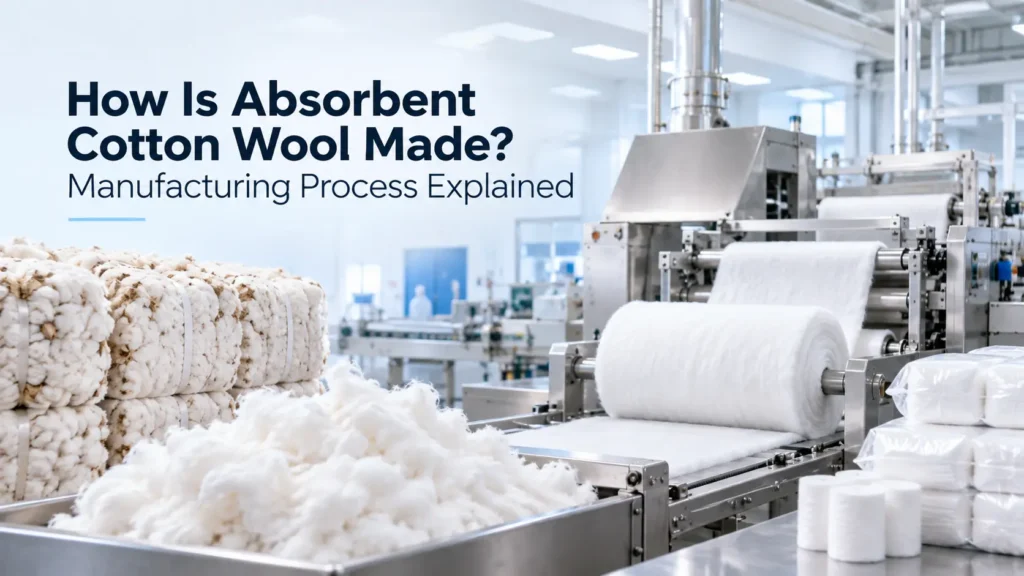
Absorbent cotton wool is made through a carefully controlled absorbent cotton wool manufacturing process that involves cleaning raw cotton, boiling it in an alkaline solution to strip away natural waxes and oils, bleaching it, spinning out excess water, drying it, then running it through lapping, carding, rolling, and cutting before it’s packed. Medical-grade batches are usually sterilized too, most often with gamma radiation.
Curious what happens to it after this? Check out our guide on absorbent cotton wool uses for the full picture.
Where the Raw Cotton Comes From
Before any processing starts, the journey begins right in the field. Currently, India is the world’s second-largest cotton producer, growing cotton across major cultivation states like Gujarat, Maharashtra, Telangana, Haryana, and Rajasthan.
For surgical-grade absorbent cotton specifically, manufacturers have traditionally favored Bengal Desi Cotton, a variety grown mainly in districts near Ganganagar, Rajasthan, and adjoining areas. This choice matters because it is highly valued for its liquid absorbency, fiber strength, and low wax content. Consequently, these specific traits make the subsequent degreasing and bleaching stages much more effective further down the line. Ideally, the fiber for this purpose runs around 18 mm in length with a micronaire value (a measure of fiber fineness) between 6.5 and 8.0.
Once harvested and ginned, the raw cotton is baled and shipped to processing facilities, where the actual manufacturing begins.
Process at a Glance
| Stage | What Happens | Why It Matters |
| 1. Opening and cleaning | Debris, seed fragments, and dust removed | Prepares fiber for even chemical treatment |
| 2. Boiling and degreasing | Cotton boiled in alkaline solution | Removes natural waxes and oils, the step that actually creates absorbency |
| 3. Bleaching | Pigment and residual impurities removed | Gives the fiber its white, clean appearance |
| 4. Chemical removal | Cotton re-washed and neutralized | Removes leftover alkali before it reaches skin |
| 5. Hydro-extraction | Water spun out at high speed | Prepares cotton for efficient drying |
| 6. Drying | Moisture removed in a dryer | Stabilizes the fiber for the next stage |
| 7. Lapping and carding | Fiber opened, aligned, formed into sheets | Creates the soft, uniform texture |
| 8. Rolling, cutting, packing | Sheets rolled, cut to size, packed | Shapes and finishes the product |
| 9. Sterilization (if required) | Typically gamma radiation | Required for medical-grade use |
Step-by-Step Breakdown of the Manufacturing Process
1. Opening and Cleaning
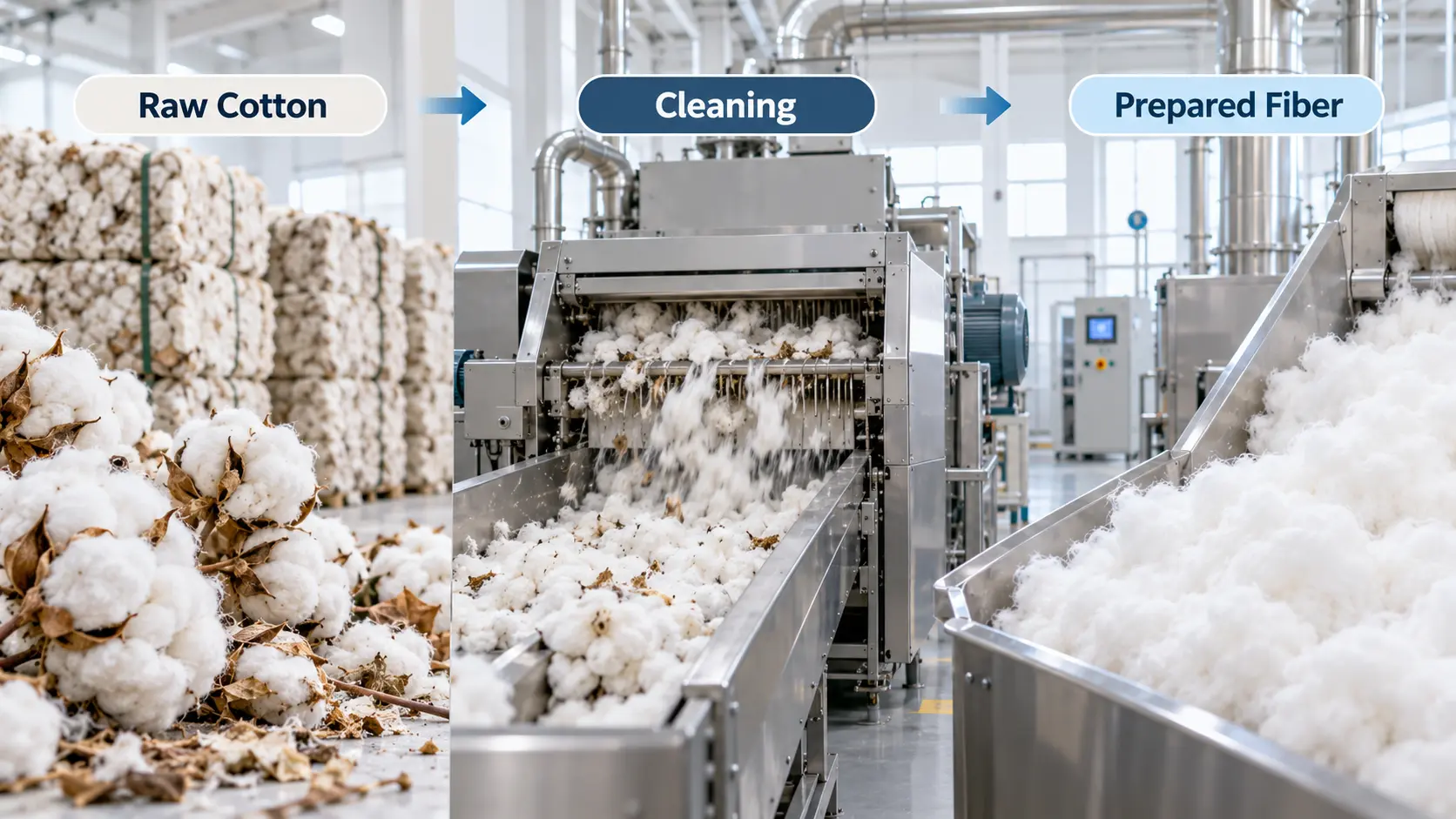
Everything starts with raw cotton, delivered to the facility in bales. First, it goes through an opener, which loosens up the tightly packed fiber. Meanwhile, this machine pulls out leaves, plant debris, seed fragments, and dust field residue. This stage is purely mechanical.
However, properly loosening the fiber here ensures that the chemical treatment in the next stage can reach every strand evenly.
2. Boiling and Degreasing
Next, the cotton moves to the step that actually makes it absorbent. Raw cotton naturally carries waxes, pectins, and fatty substances on it. Unfortunately, those coatings significantly reduce how well it soaks up water.
To strip these away, the loosened cotton goes into a kier (a specialized pressure vessel) along with water, steam, and a combination of caustic soda, soda ash, and industrial detergent. The whole batch boils at roughly 90°C for 3 to 4 hours. Therefore, this long duration is enough to break down and dissolve the oils and waxes clinging to each fiber, while simultaneously softening up any leftover debris. Once it’s done, the cotton moves to washing tanks for a thorough rinse.
Insider Tip: If you rush this step, the finished product just won’t absorb liquid the way it’s supposed to. As a result, there is no shortcut around it.
3. Bleaching
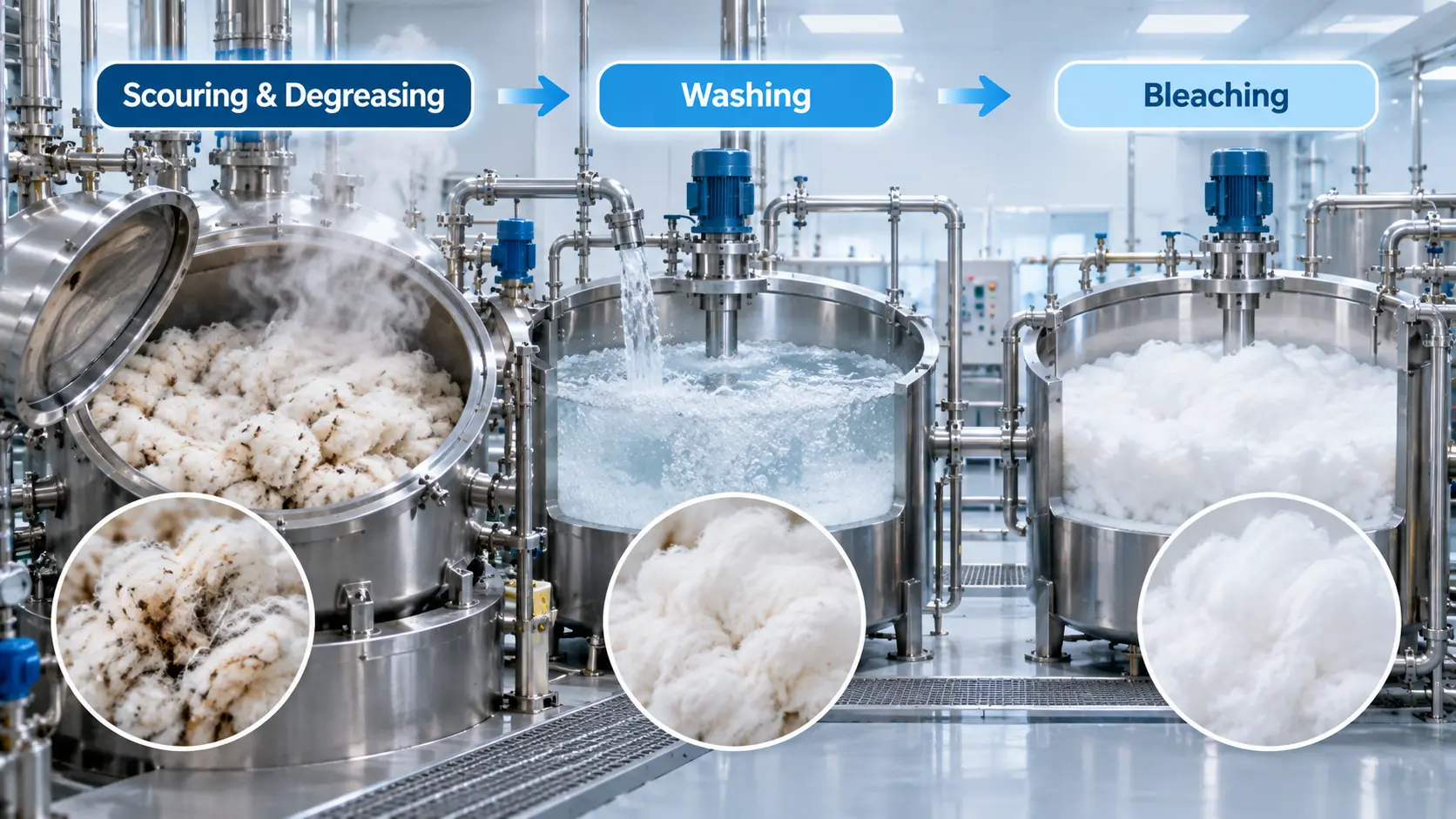
Although it is clean after boiling, raw cotton, particularly desi varieties like Bengal Desi Cotton, is naturally brownish rather than white. Because degreasing alone doesn’t fully remove that tint, bleaching is required to whiten it. Manufacturers typically choose one of two common agents:
- Hydrogen Peroxide: Commonly preferred by modern manufacturers because it is a gentler, more eco-friendly alternative to chlorine-based bleaching.
- Sodium Hypochlorite: An alternative bleaching agent traditionally used in the same stage.
Ultimately, bleaching improves whiteness and wetting properties, while also helping to break down any remaining foreign material.
4. Chemical Removal and Neutralization
Subsequently, the bleached cotton is washed again to remove residual bleaching chemicals. A carefully controlled quantity of dilute hydrochloric acid or sulfuric acid is then added just enough to neutralize leftover alkali and bring the aqueous extract into the required pH range (6.5 to 7.5, per the IP standard below). This is followed by thorough water washing to clear any remaining residue. This step matters because any chemical residue left in the fiber can irritate skin or interfere with sterility later on.
5. Hydro-Extraction
Before drying, the wet cotton goes through a hydro-extractor, which spins it at high speed using centrifugal force to remove excess water. This step significantly reduces drying time and energy use at the next stage.
6. Drying
Afterward, the hydro-extracted cotton passes through a dryer to remove remaining moisture under controlled temperature conditions. As a result, the fiber becomes perfectly stabilized before it moves to lapping.
7. Lapping and Carding
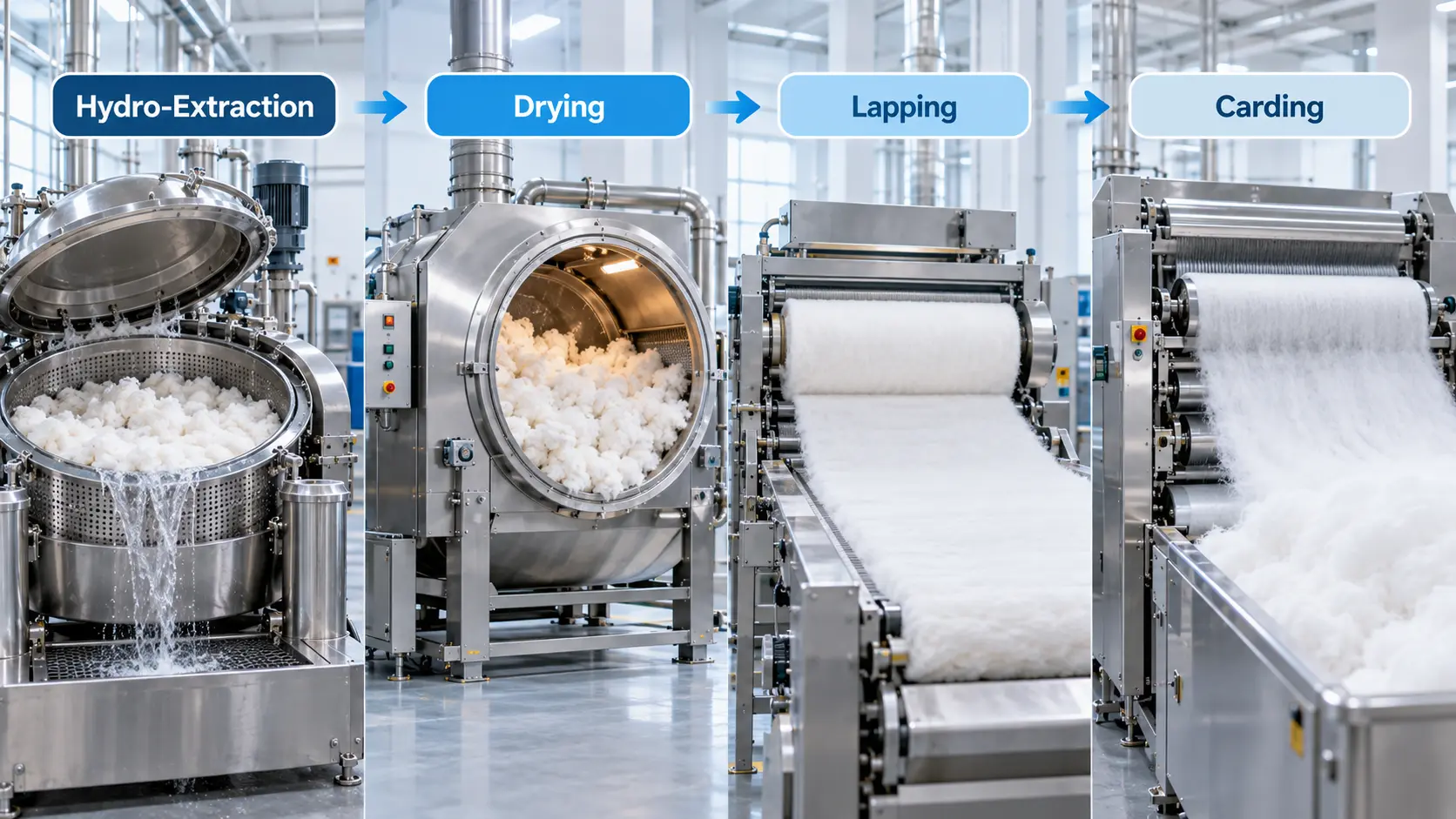
At this stage, two key steps happen in tight sequence:
- Lapping: The dried cotton is opened up again and formed into laps, basically loose sheets of consistent weight, getting it ready for carding.
- Carding: The laps go into a carding machine, where the cotton is combed and wound around rollers in thin, even layers. This step removes short fibers and knots, and it’s where the material finally takes on that familiar soft, lofty texture you’d recognize as cotton wool.
8. Rolling, Cutting, and Packing
Furthermore, the carded cotton is compressed and rolled into rolls of the required size, often with packaging paper wound in as it rolls. The rolls are then weighed, cut to the specified weight and dimensions, labeled, and packed, typically in polythene sheeting that’s heat-sealed for protection.
9. Sterilization (Where Needed)
Lastly, medical-grade absorbent cotton wool often requires sterilization before it ships. Government technical guidelines for Indian manufacturers point to gamma radiation, applied after peroxide bleaching, as the primary method used for this step. Not every batch is sterilized at the manufacturing stage; some buyers, particularly hospitals and pharmaceutical companies, handle sterilization themselves as part of their own internal quality process.
Quality Standards and Testing
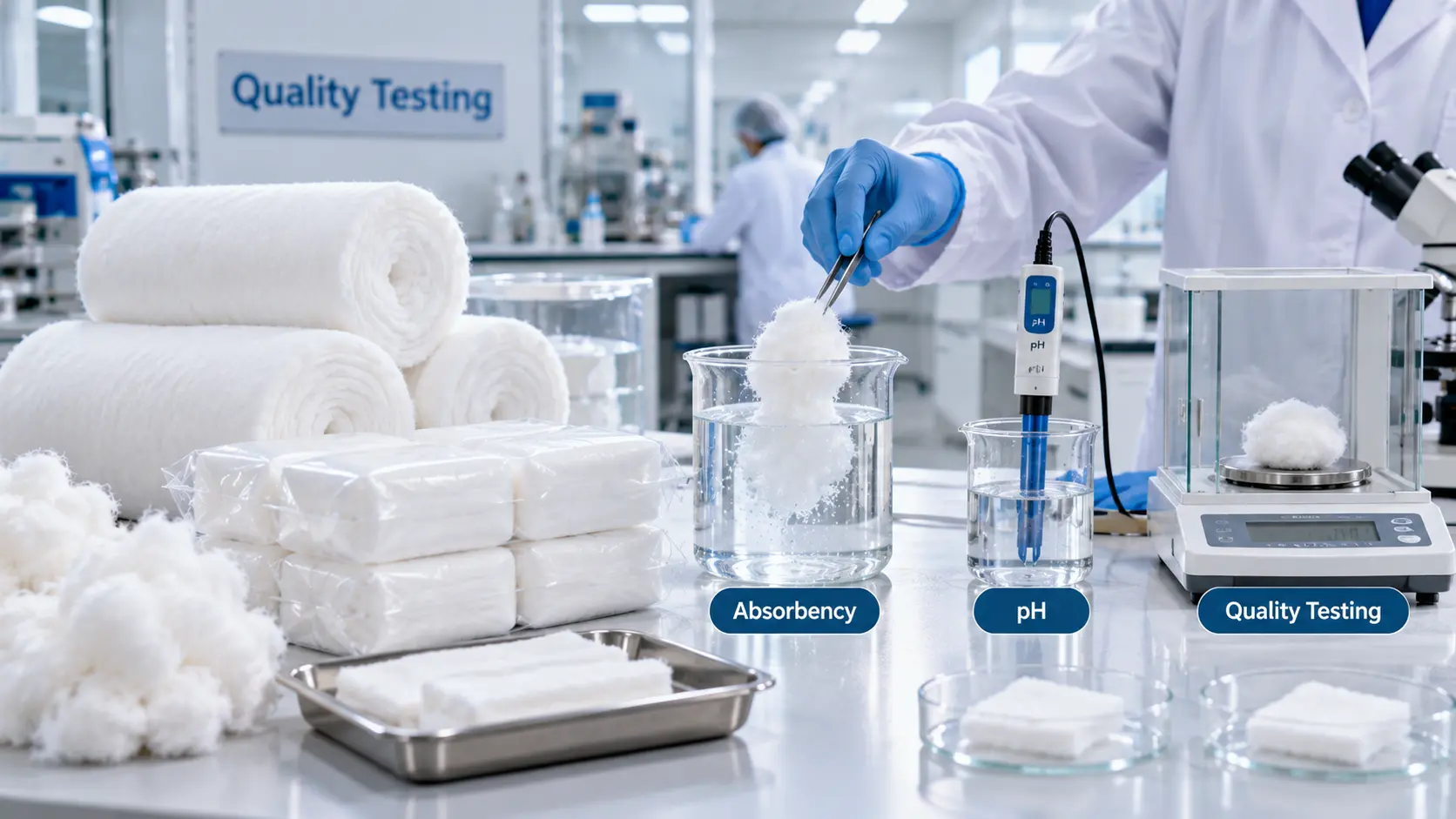
Absorbent cotton is regulated as a drug in India under the Drugs and Cosmetics Act, 1940, with the Central Drugs Standard Control Organisation (CDSCO) as the apex regulatory body. Finished batches are tested against Indian Pharmacopoeia (IP) benchmarks before dispatch. Some of the actual specified limits include:
- Sinking time (absorbency): Not more than 10 seconds.
- Water holding capacity: Not less than 23 g of water per 1 g of cotton.
- pH of aqueous extract: 6.5 to 7.5.
- Loss on drying: Not more than 8%.
- Water-soluble substances: Not more than 0.5%.
- Ether-soluble substances: Not more than 0.5%.
- Sulphated ash: ≤0.5% under the IP monograph; the applicable BIS specification (IS 14944) sets it even tighter at ≤0.4%.
- Neps (fiber knots): Not more than 250 per test.
Fiber composition itself is tightly defined too: absorbent cotton consists of roughly 98% to 99.5% pure cellulose, with individual fibers around 12 to 40 mm in length.
Frequently Asked Questions
How long does it take to manufacture absorbent cotton wool?
The degreasing (boiling) stage alone typically runs 3 to 4 hours. The full production process, from raw cotton bales to the final packed product, generally takes between 12 to 24 hours per batch, depending on the facility’s drying capacity and whether final sterilization is done on-site.
Is absorbent cotton wool different from regular cotton?
Yes, regular cotton is naturally water-repellent. Raw cotton is coated in natural waxes and fatty acids that cause water to bead up and roll off. The industrial boiling and degreasing stage removes these coatings, transforming it into highly absorbent cotton wool.
Can you make absorbent cotton wool at home?
No, it cannot be safely made at home. Achieving medical-grade absorbency requires specialized pressure vessels (kiers) to boil the cotton at high temperatures, alongside heavy chemicals like caustic soda. Furthermore, industrial neutralizing and carding machines are required to prevent skin irritation and achieve the proper soft texture.
What makes “Bengal Desi Cotton” the preferred choice?
Bengal Desi Cotton has an ideal short, coarse structure with low natural wax content. This specific texture allows chemicals to strip away impurities easily and provides excellent liquid-holding capacity, making it perfect for surgical use.
Sources & References
- Government of India, Ministry of MSME, Development Institute Chennai. Road Map for Domestic Manufacturing of Cotton Wool Absorbent. Prepared by S. Suresh Babuji, Joint Director.
- Central Drugs Standard Control Organisation (CDSCO), Ministry of Health & Family Welfare, Government of India. Official regulatory authority for drugs and pharmaceutical products in India.
- Indian Pharmacopoeia Commission (IPC), Ministry of Health & Family Welfare, Government of India. Official body responsible for the Indian Pharmacopoeia Commission (IPC) and the drug standards referenced in this article.
- Bureau of Indian Standards (BIS), Government of India. Indian Standards referenced in this article, including IS 16468:2016, IS 667, IS 1390, IS 4905, IS 10150, and IS 14944.

